
Getting to the roots of chronic disease and pain
“The path that leads you to disease is not the path that leads you back to health.”
Robert K. Naviaux
With Instructor Alexis Costello
The kinds of issues that we are seeing with our clients are changing.
In the past few years, the number of people struggling with long-term, chronic, sometimes undiagnosable conditions seems to be on the rise. Our work is uniquely suited to these challenges as we treat individuals rather than symptoms, but we can still notice the shift in the kinds of stresses people are showing up with.
According to the UN (2023): The annual global death toll from non-communicable diseases such as cancer, diabetes and heart disease, is estimated at 36 million.
WHO said (2023) that the increasing toll of NCDs meant that if the trend were to continue, by around 2050, chronic diseases such as cardiovascular diseases, cancer, diabetes and respiratory illnesses – will account for 86 per cent of the 90 million deaths each year: a staggering 90 per cent increase in absolute numbers, since 2019..
Medicine is based around the idea of looking for a cause of the disease/injury, etc. and then trying to undo that cause. When we are discussing chronic illness however, it becomes a lot more complicated. Often the ‘cause’ is long in the past, or there are multiple causes.
According to Robert K. Naviaux’s studies: “the Emerging evidence shows that most chronic illness is caused by the biological reaction to an injury, and not the initial injury, or the agent of injury itself. For example, melanoma can be caused by sun exposure that occurred decades earlier, and post-traumatic stress disorder (PTSD) can occur months or years after a bullet wound has healed. If healing is incomplete between injuries, more severe disease is produced.”
This healing that he is speaking of is a biologically predetermined sequence, and all life follows this pattern.
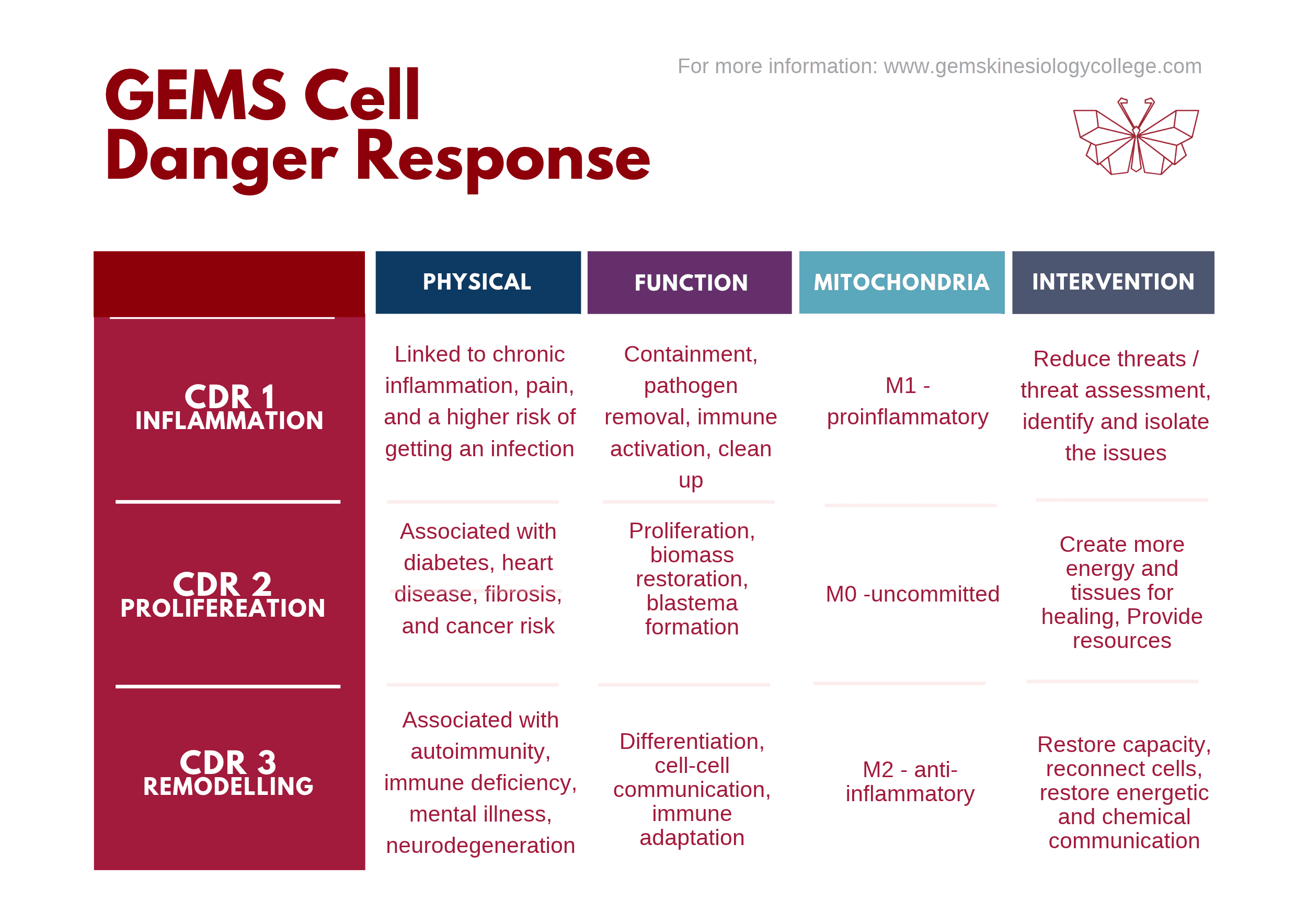
Chronic disease then, is what happens when cells are not able to fully recover and heal before dealing with the next injury or stressor. They get caught in a loop, falling further and further behind. This kind of a loop is underneath many degenerative and chronic conditions including susceptibility to sequential or recurrent infections, autoimmune diseases like rheumatoid arthritis, diabetes, heart and kidney disease, asthma and chronic obstructive pulmonary disease (COPD), autism spectrum disorder (ASD), chronic fatigue syndrome (CFS), cancer, affective disorders, psychiatric illnesses, Alzheimer dementia, etc.
We are used to thinking of these as very different conditions that we might treat in very different ways, but what if we could look at the common underlying mechanism underneath them? Chronic diseases are always systematic problems, affecting multiple places in the body.
All chronic diseases produce system abnormalities that either block communication or send alarm signals between cells and tissues. It’s like the cells either can’t talk at all, or, are screaming at each other. Cells that cannot communicate normally cannot reintegrate back into normal tissue and organ function, and are functionally lost to the tissue, even when they are surrounded by cells that are functioning normally.
If the block in cell communication occurs in a child, then the normal trajectory of development can be changed, leading to alterations in brain structure and function, and changes in long-term metabolic adaptations of other organs like the liver, kidney, microbiome, and immune system. If the communication block occurs in adults, then organ performance is degraded over time, more and more cells with disabled or dysfunctional signalling accumulate, and age-related deterioration of organ function, senescence, or cancer occurs.
Blocked communication and miscommunication inhibit progress through the healing cycle, and prevent normal energy, information, and resource-coordination with other organ systems. This predisposes cells and tissues to additional damage and disease.
Learning Objectives:
– how cells work and divide
– understanding the 3 stages of the Cell Danger Response and how this manifests in clients
– the multifaceted roles of mitochondria, clearing mitochondrial memory and mtDNA
– understanding extracellular ATP and purineurgic signalling
– simple balances for limbic kindling, allostatic load, and cell stress perception
– placing the CDR within the Guardian Element and GEMS model
– supporting the mitochondria to get out of the CDR loop
We would be delighted to see you in this inaugural class!